
Broadcom: The AI Arms Dealer That Wins Regardless 💽
PEG of 0.58x, expected EPS growth of 41.2%, and billings into 2028 🚀

Every AI investment thesis eventually runs into the same question:
What if you picked the wrong winner?
Nvidia versus custom silicon, Google versus OpenAI versus Anthropic, GPUs versus XPUs.
Broadcom’s entire investment case is built on not having to answer that question.
It sells the chips and the networking gear to nearly every serious contender in the race, and gets paid whether the customer wins, loses, or simply keeps spending to stay in the game.
The Q2 2026 results provided evidence that this isn’t just a narrative, it is already showing up in the numbers.
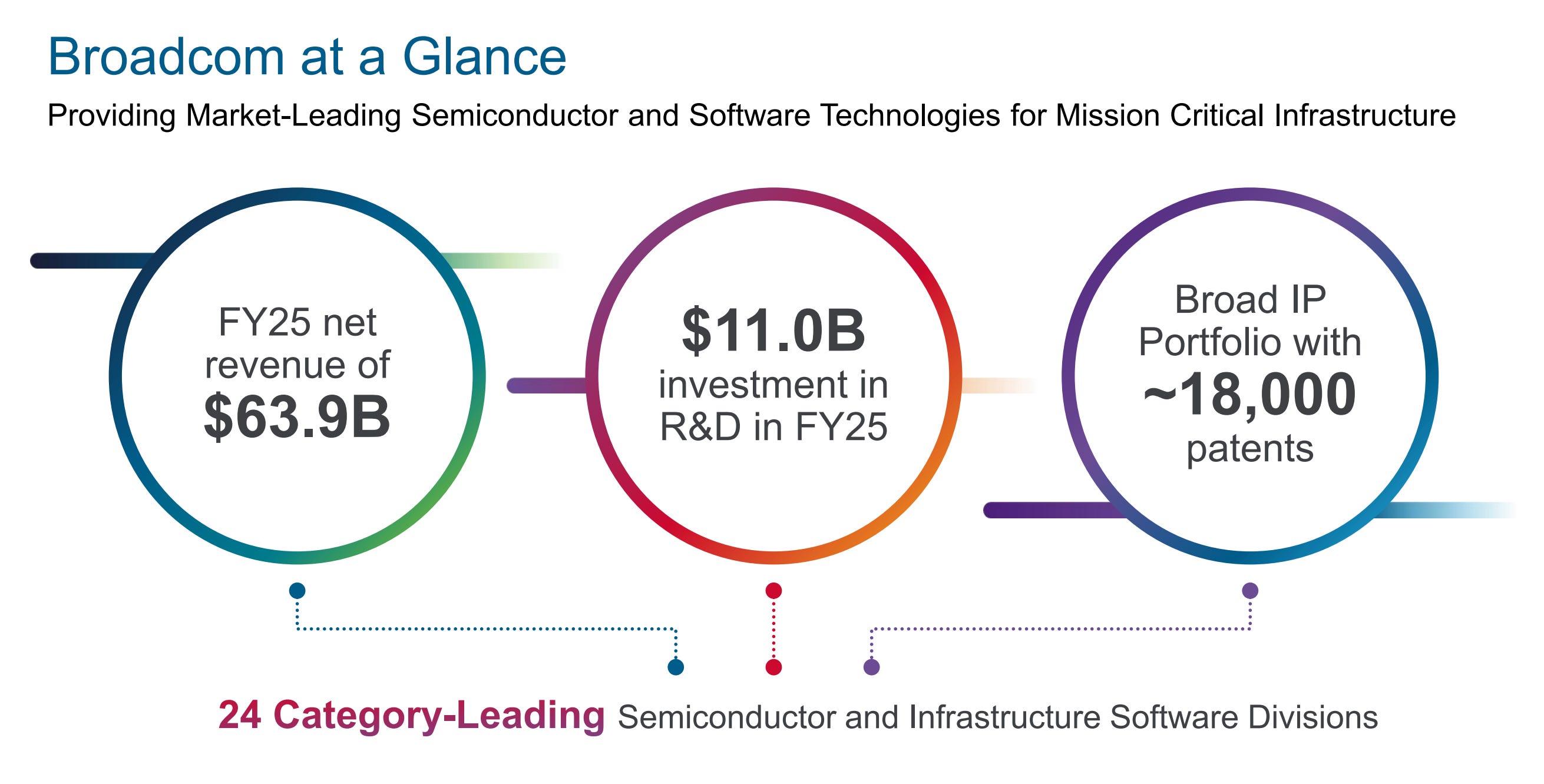
Moat: Diversified across the entire AI and Technology ecosystem
Broadcom does not rely on a single customer relationship.
It has six core AI customers - including nearly every serious AI lab and Hyperscaler.
Each of the customers are locked into multi year, multi-gigawatt commitments.
Alphabet has a long-term contract announced in April of 2026, for multiple generations of TPUs and AI networking.
Anthropic has access to over 1 gigawatt of Broadcom TPU-based compute in 2026, expanding to another 5 gigawatts of next-generation compute starting 2027.
OpenAI has silicon in production for late 2026, with a commitment of 1.3 GW in 2027 as part of a larger 10 GW agreement by 2029.
Meta signed a partnership in April for multiple generations of MTIA XPUs, targeting 3 GW deployed through 2028.
Two additional customers have already placed $6 billion in purchase orders for shipments beginning late 2026.
CEO Hock Tan was directly asked whether the new Google agreement secures Broadcom’s share against competitive risk. His answer was:
“We fully expect that there’ll be some diversity of sources for them.”
Tan is not claiming that Broadcom has a monopoly, instead, he is communicating that they don’t need one, because Broadcom is already embedded across the entire field of competitors.
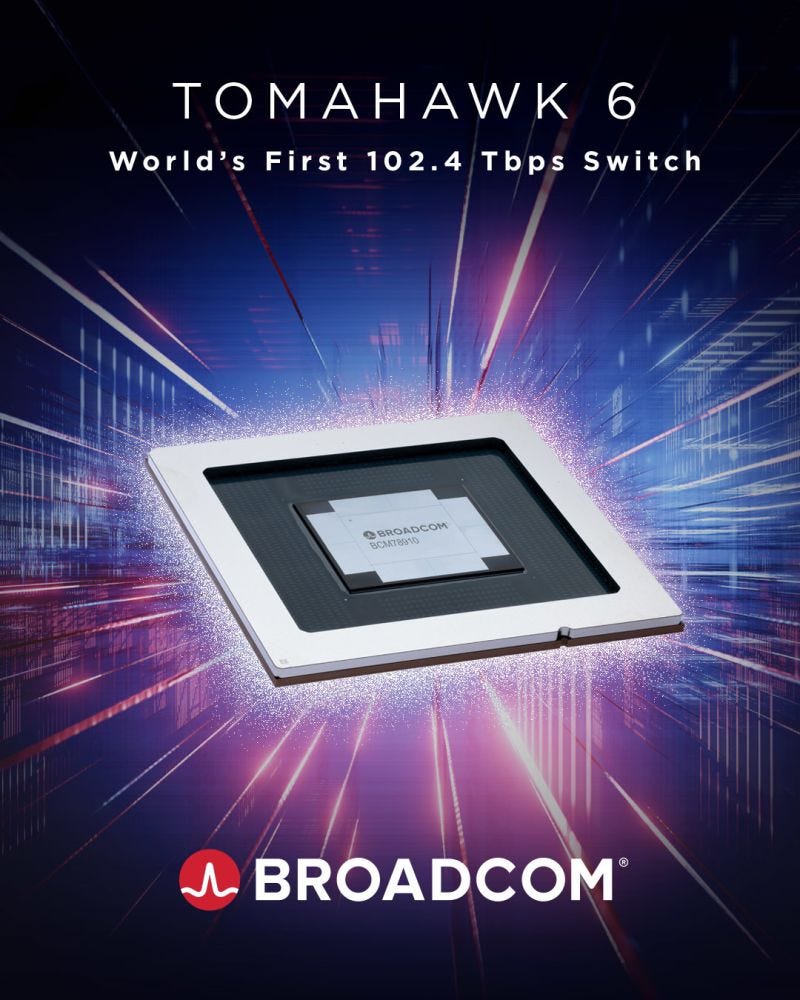
The moat is reinforced by a full-stack networking position that goes beyond chip design. Broadcom has been shipping the industry’s only 100-terabit Ethernet switch, the Tomahawk 6, for over a year, with a next-generation 200-terabit switch taping out this quarter.
Hock Tan stated on the Q2 earnings call:
“We are the de facto standard in the industry.”
Networking represented almost 40% of Q2 AI revenue, and management described demand for XPUs and networking together as “simply insatiable.”
Notably, Broadcom has deliberately chosen not to compete in full AI systems or racks. Asked directly whether rack-scale versus chip-scale dynamics were shifting, Tan’s answer was: “No rack. It’s all chips.”
This matters for the moat. Broadcom stays a critical supplier to every systems builder rather than a competitor to any of them.
We’re running a summer sale now, where you can get -40% off an annual subscription. Read more about the Premium service here.
Business model: Capital-light
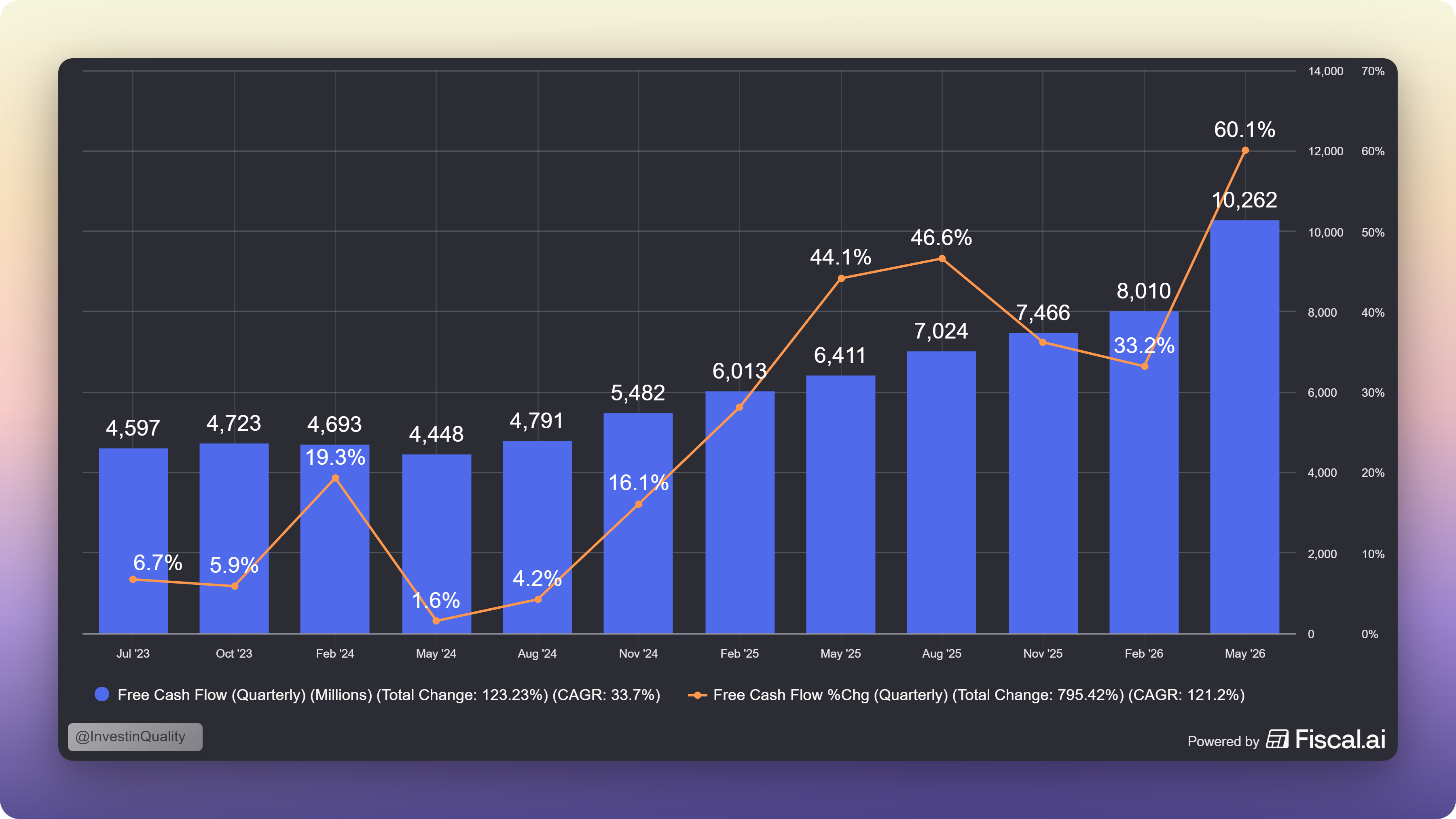
Broadcom spent just $231 million on capital expenditures in a quarter that generated $10.5 billion in operating cash flow.
That’s the structural difference between owning fabs (TSMC) and designing chips that someone else manufactures.
Free cash flow hit a record $10.26 billion, 46% of revenue, up 60% year-over-year.
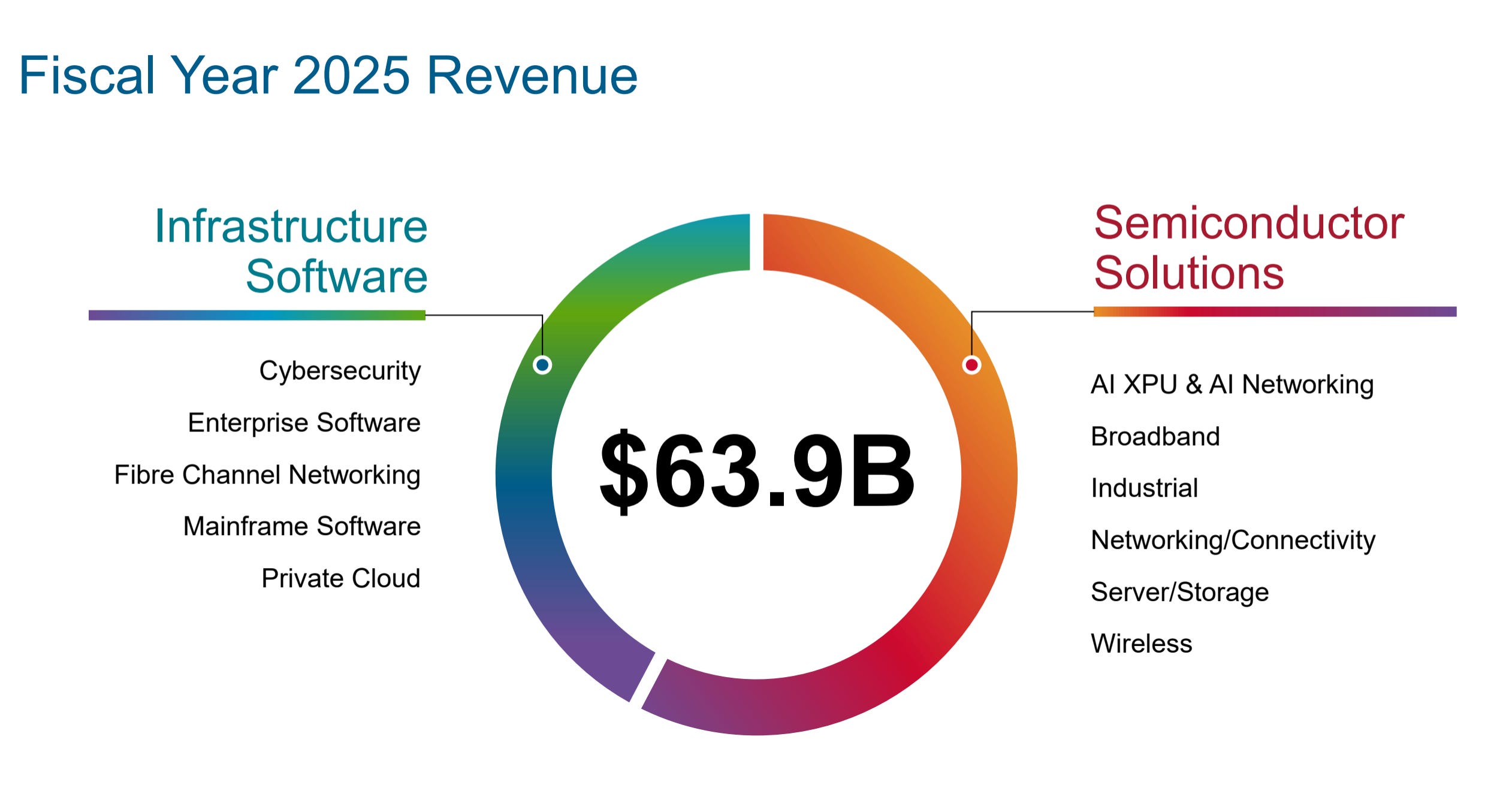
The segment split is:
Semiconductor Solutions (68% of revenue, up 79% year-over-year)
Infrastructure Software (32% of revenue, up 9% year-over-year)
One thing to note from the Q2 earnings call is that management has guided margins down to ~74% in Q3 (From 77.1% in Q2).
CFO Kirsten Spears was explicit that this is a product mix effect, and not deterioration of the business:
“This decline in gross margin does not represent a structural change in semiconductor margin. Rather, it reflects product mix between semiconductors and infrastructure software... We highly recommend that investors model semiconductor and infrastructure software margins separately.”
Operating margin is guided flat at 67% (The number that matter the most).
The most structurally interesting development this quarter is a new financing vehicle.
Broadcom is partnering with Apollo, Blackstone, and other investors to create an “AI XPU platform” designed to deploy more than 20 gigawatts of compute capacity through 2028, with a first tranche valued at $35 billion already being launched by Apollo.
The purpose is to let the best AI labs (Anthropic, OpenAI) access Broadcom-designed compute capacity without Broadcom having to carry all of that capital commitment on its own balance sheet.
It’s a new structure, and worth watching as it matures rather than assuming it behaves like a traditional customer financing arrangement.
Management: Hock Tan’s fourth act
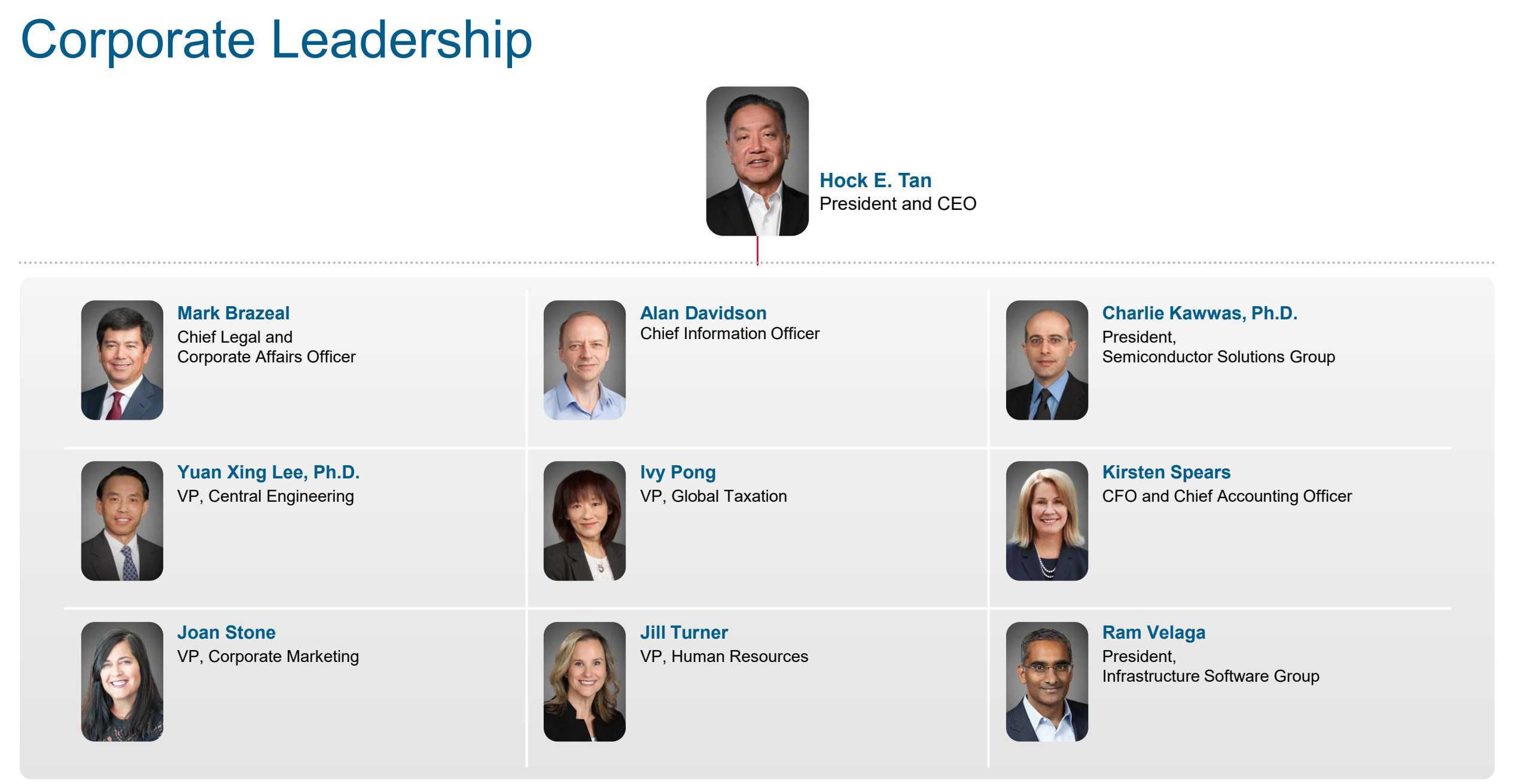
Every quarter, analysts ask some version of “can this last?” It’s the wrong question. Hock Tan has run this playbook before: “acquire, strip to the core, run for cash flow”, three times before, and each time the market underestimated him.
He took over what was then Avago in 2006, when the company was a roughly $1.7 billion Agilent spinout nobody outside the industry had heard of.
Over the next two decades he turned it into the operating model for the entire semiconductor sector: buy a company with real technology but bloated costs, cut what doesn’t drive margin, keep what does. What cash flows compound.
This pattern shows up in Broadcom’s previous deals.
LSI in 2013 gave Avago a storage and networking chip business it used to build scale. The 2016 Broadcom Corporation merger, a $37 billion deal, is the best example of the playbook in action.
Avago was the smaller company by revenue, but it kept the Broadcom name for the brand recognition and then ran the combined company on Avago’s leaner operating model.
CA Technologies and Symantec’s enterprise security business extended the same logic into software. VMware, a $69 billion deal that closed in 2023, was the biggest test yet of whether the model scales, and two years in, VMware is now 32% of revenue and growing.
This is not AI-specific moves, but it is disciplined execution from the management team, lead by Tan.
So, when Tan tells you AI semiconductor revenue is going from $56 billion in 2026, to an “excess of $100 billion” in 2027 - we should listen.
The one real open item is the CFO seat. Kirsten Spears is retiring June 12 after 12 years in the role, handing off to Amie Thuener. Both were on the call together, which is the right way to do a transition, but a 12-year CFO of Kirsten’s caliber is a hard act to follow.
Growth: The backlog is building
Broadcom’s financial snapshot shows how the business is growing rapidly, both from a revenue, earnings and cash flow perspective.
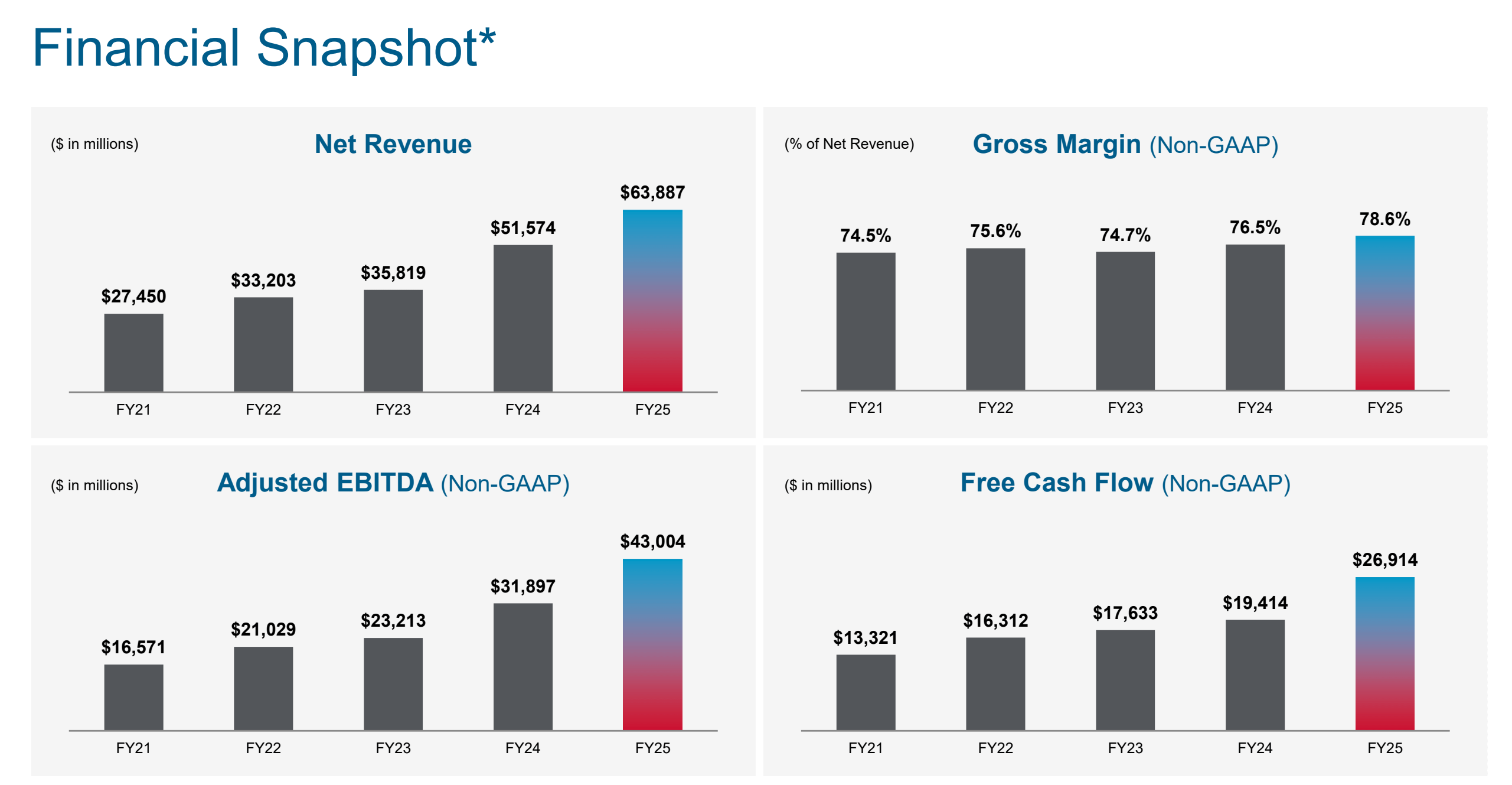
Most companies report growth as a single number: revenue, up X%. That number tells you what already happened. It doesn’t tell you what happens next. Two data points in this print tells us more about the future:
The first is book-to-bill.
In Q2, Broadcom booked over $30 billion in AI semiconductor orders against just $10.8 billion actually shipped. That’s roughly a 3-to-1 ratio.
A book-to-bill ratio this high means customers are placing orders three times faster than Broadcom can fill them, which is the opposite of a company drawing down an existing backlog to manufacture growth.
If bookings had fallen and shipments stayed flat, that would be a company working through old orders with nothing new coming in behind it.
For Broadcom, the queue is getting longer.
The second is this line from the call:
“Our visibility runs all the way to 2028 right now. Three months ago, I can tell you our visibility ran pretty much 2027.”
That’s customers locking in capacity commitments an entire year further out than they were three months ago.
A revenue beat can come from one big customer pulling forward an order. A visibility window that extends by a full year across the customer base is a much harder thing to manufacture, and a much stronger signal that demand is structural rather than lumpy.
The numbers underneath both of these points are strong on their own. Q2 AI semiconductor revenue hit $10.8 billion, +143% YoY and above management’s own forecast.
Q3 guidance calls for $16 billion, up over +200% YoY.
Full-year 2026 AI semiconductor revenue is guided to $56 billion, up ~+180% from 2025, and management reiterated 2027 guidance of “in excess of $100 billion.” Total consolidated revenue was $22.2 billion in Q2, a record, +48% YoY, with Q3 guided to $29.4 billion.
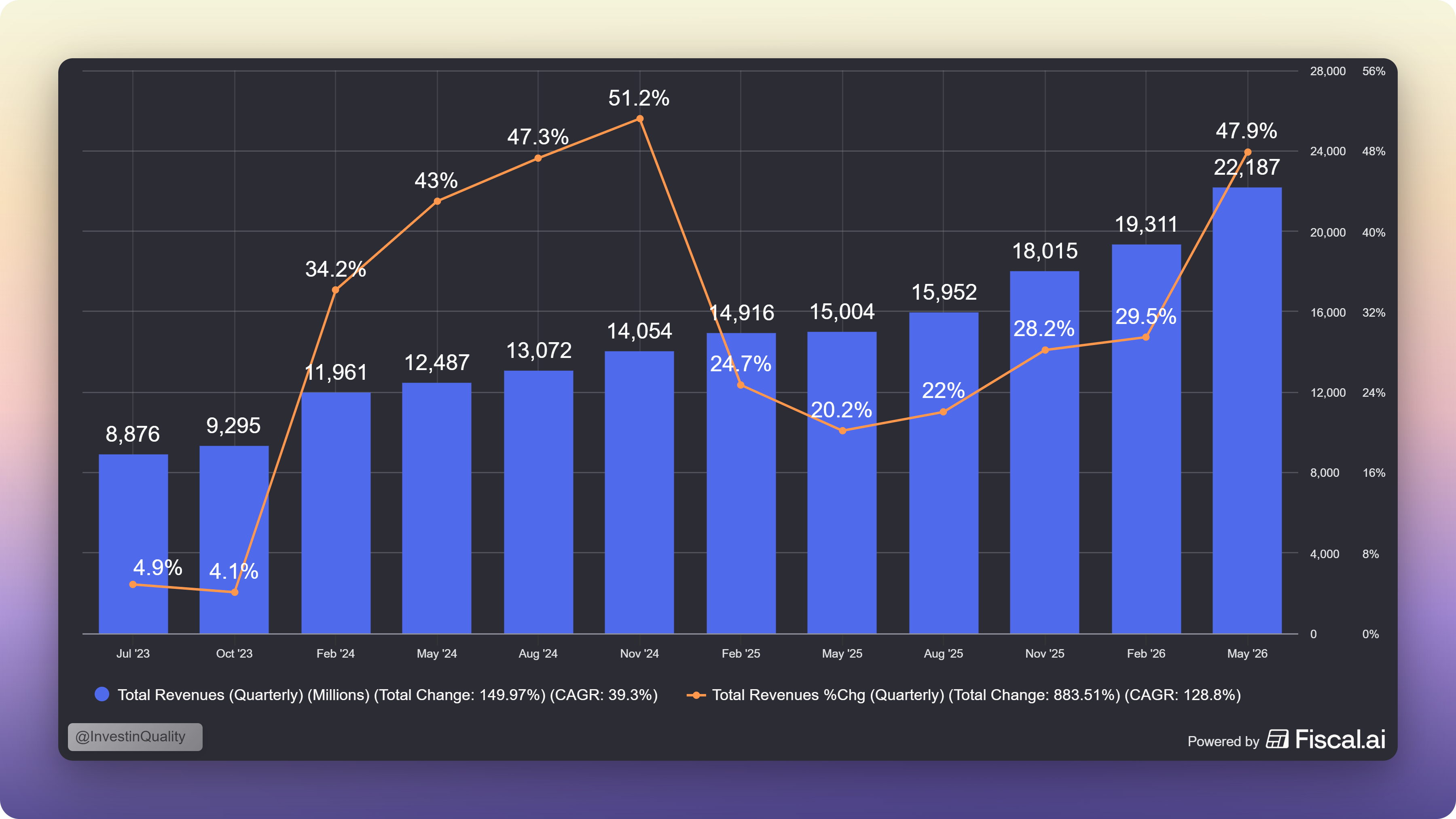
However, the book-to-bill ratio and the expanding visibility window are the two numbers that tell you whether next year’s guide is believable.
Both point the same direction.
Valuation: Fair price if you believe the growth story
Broadcom trades at roughly 24x forward earnings against a 41.2% long-term expected EPS growth rate. That’s a PEG of about 0.58. For context, that’s meaningfully cheaper than ASML.
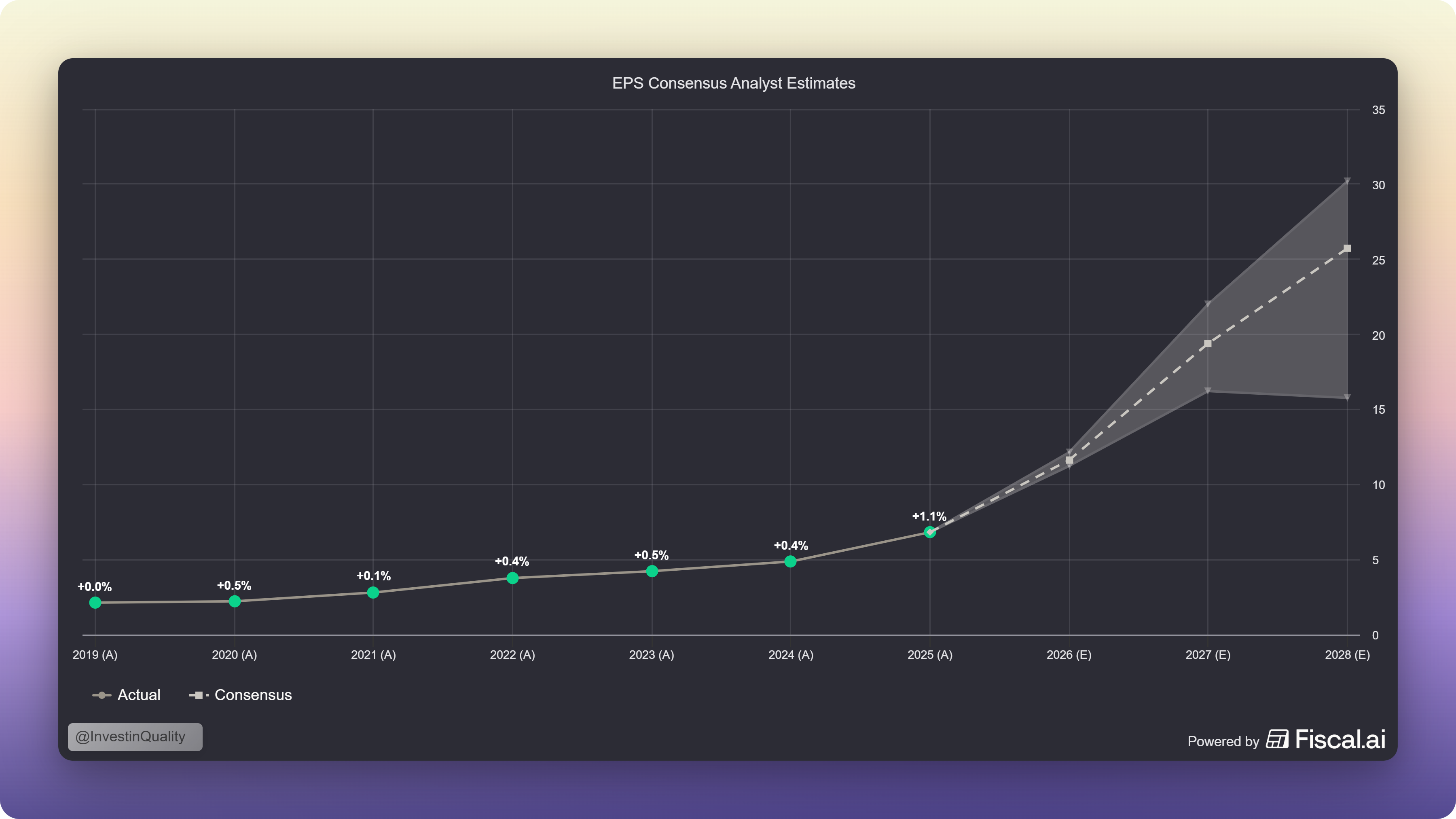
But the more important point isn’t the number, it’s what’s behind it. Two companies can carry the same PEG ratio and not be equally cheap, because the quality of the growth assumption is different.
ASML’s growth sits in a backlog of tool orders that takes years to convert into machines shipped and revenue recognized. A lot can happen to that backlog between now and then: customers can push out capex, delay construction, or reprioritize.
Broadcom’s growth is already landing in the current income statement. It’s backed by a 3-to-1 book-to-bill ratio and customer-by-customer gigawatt commitments that management disclosed in enough detail to sanity-check independently on the call. Same discount to growth, less distance between the assumption and the cash.
Here are my 3 valuation scenarios for Broadcom:
The rest of this article, including our next three picks and bonus, is for Premium subscribers only.
We’re running a summer sale now, where you can get -40% off an annual subscription. Read more about the Premium service here.
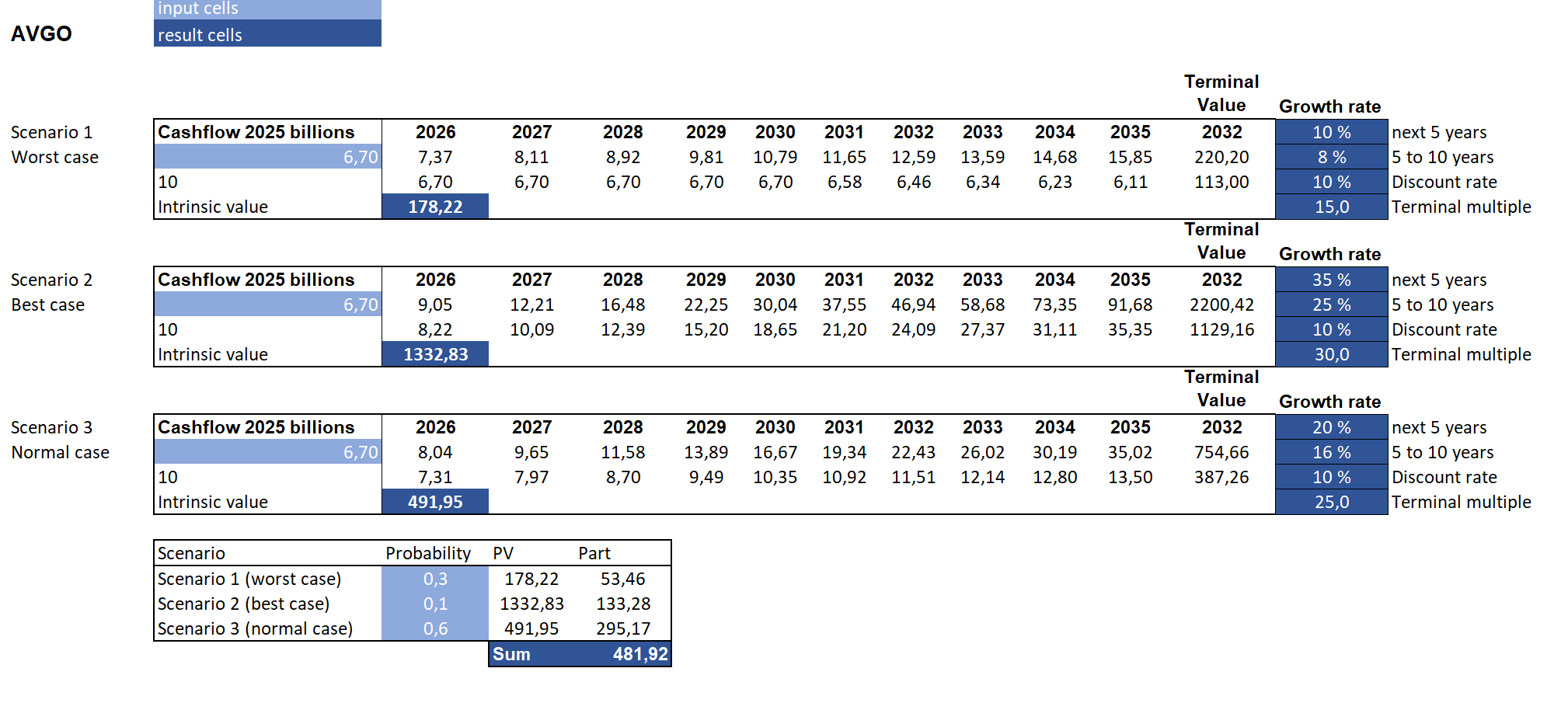
Fair value estimate: $481.92
Current price: $393.29
Upside: 22.5%
CAGR from base case: 14%
My DCF is conservative. I don’t want to model in a 41.2% long term EPS growth, but the near term earnings expectations are even higher than this, in the 60-80% range.
The key risk to the valuation of Broadcom is that the AI capex narrative holds. Any break in the story can trigger a rerating of Broadcom and the rest of the AI value chain.
So, to be direct, Broadcom has significant upside if the growth story plays out, but with the down side risk if the narrative shifts in the coming year or two.
Despite this, Broadcom is well positioned to benefit from the current market demand, and is an excellent way to get exposure to the ‘AI buildout’.
Key risks
Customer concentration is the largest risk.
Six customers drive essentially all AI revenue. Tan was asked directly whether the new Google agreement locks in Broadcom’s share, and his answer was that Google will maintain “diversity of sources.” That’s Tan being honest, not evasive: Broadcom will not win every design at every customer, even its most strategic one. A single lab deciding to bring more silicon in-house, or shifting spend toward a competitor’s design, would show up fast in a business this concentrated. This is the risk to actually watch.
The Apollo and Blackstone AI XPU financing vehicle is new and untested.
Structuring $35 billion, and eventually over 20 gigawatts, of compute capacity funding through third-party investors rather than Broadcom’s own balance sheet is not a traditional customer contract. It lets frontier labs access capacity without Broadcom carrying the capital commitment, which is elegant in theory. But there’s no track record for how a vehicle like this behaves across a full spending cycle, a downturn, or a customer default. Worth watching closely as it scales rather than assuming it behaves like a normal financing arrangement.
The gross margin contraction guidance is a headline risk.
Consolidated gross margin is guided down to roughly 74% in Q3 from 77.1% in Q2. CFO Kirsten Spears was explicit that this is a mix effect between semiconductor and infrastructure software, not margin compression, and that operating margin, the number that actually matters, is guided flat at 67%. The risk isn’t the number itself. It’s that a market that has already punished this stock on guidance technicalities before might react to the headline print before anyone reads the explanation underneath it.
The takeaway
Broadcom doesn’t need to guess who wins the AI race. Google, Anthropic, OpenAI, Meta, it’s building the chips and the networking for nearly all of them, and it gets paid regardless of which architecture ends up on top.
This is what makes Broadcom such a strong investment case for exposure to the AI-boom.
A 3-to-1 book-to-bill ratio means the backlog is getting longer. A visibility window that stretched from 2027 to 2028 in three months means customers are locking in years of capacity.
Those two data points matter more than any single quarter’s revenue beat, because they tell you next year’s guidance is grounded in something real.
And the man running it has done this before. Four times, actually, each one bigger than the last, each one hitting the numbers he committed to. That track record is worth something when he tells you AI revenue doubles again next year.
None of that makes this risk-free. Six customers still drive almost all the AI revenue, the Apollo financing structure is unproven, and the market may still flinch at a gross margin headline that doesn’t deserve the reaction. But at a PEG of roughly 0.58, backed by growth that’s already showing up in the income statement rather than sitting in a backlog waiting to convert, this is priced like the outcome is still in doubt.
It isn’t. That’s the opportunity.
Ready to take the next step? Here’s how I can help you grow your investing journey:
Go Premium — Unlock exclusive content and follow our market-beating Quality Growth portfolio. Learn more here.
Essentials of Quality Growth — Join over 300 investors who have built winning portfolios with this step-by-step guide to identifying top-quality compounders. Get the guide.
Free Valuation Cheat Sheet — Discover a simple, reliable way to value businesses and set your margin of safety. Download now.
Free Guide: How to Identify a Compounder — Learn the key traits of companies worth holding for the long term. Access it here.
Free Guide: How to Analyze Financial Statements — Master reading balance sheets, income statements, and cash flows. Start learning.
Get Featured — Promote yourself to over 24,000 active stock market investors with a 42% open rate. Reach out: investinassets20@gmail.com