
Top 5 Quality Buys January 💎
5 quality businesses trading at fair valuations 📈

Hi partner! 👋🏻
Welcome to the January edition of Top 5 Buys ✅
In this article, we will discuss our top stock picks for January 2025.
Let’s get into it 👇
The Market Sentiment: Fear
The market is showing short-term volatility due to geopolitical events, primarily Trump’s comments and rhetoric about Greenland, which threaten the NATO alliance.
Despite this, all major indices are trading close to all-time highs, and the greed-to-fear index is still pointing towards ‘Greed’:
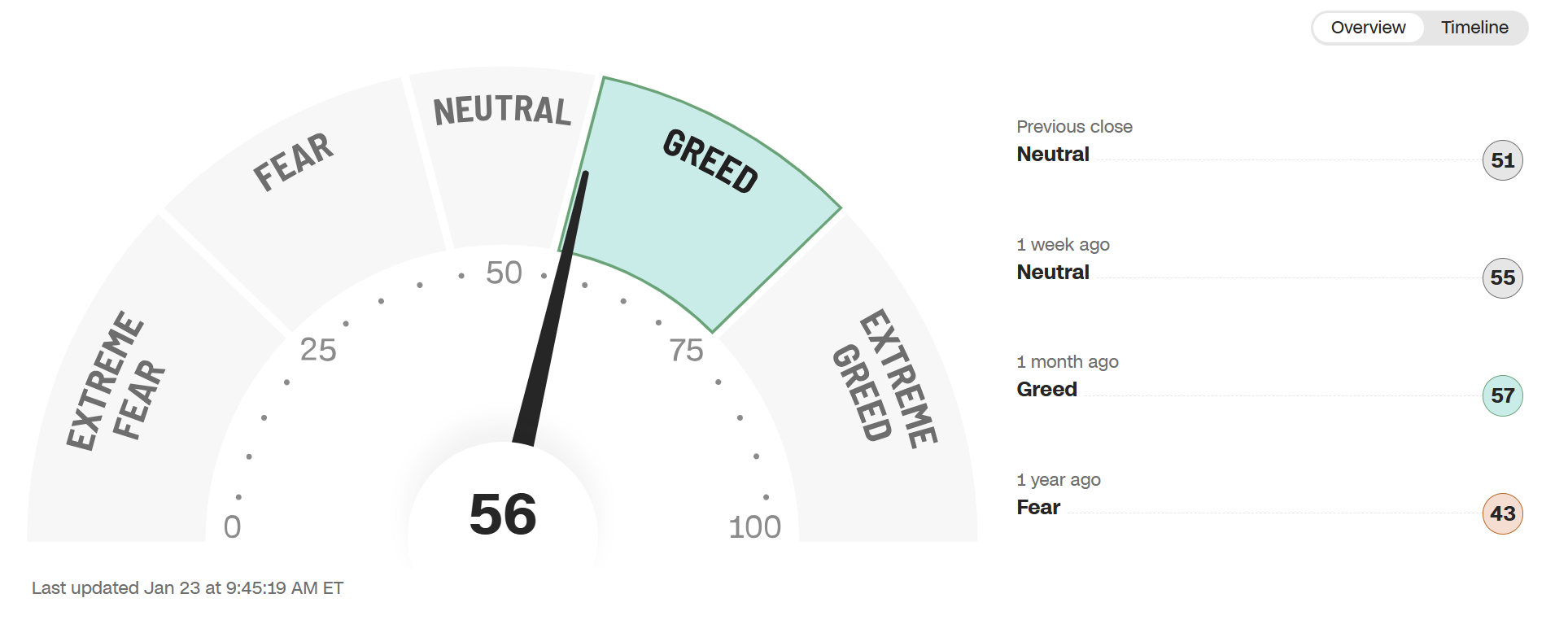
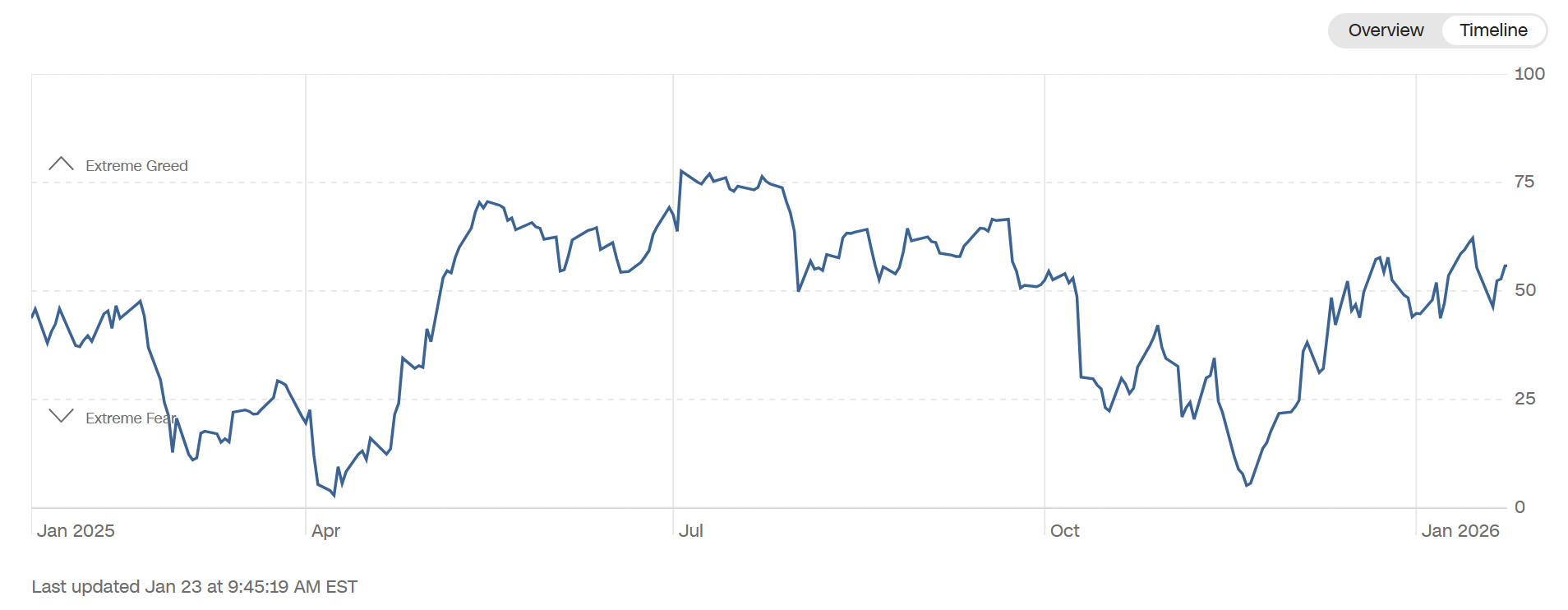
Investor sentiment has gone from extreme fear in November to Greed (Although close to Neutral):
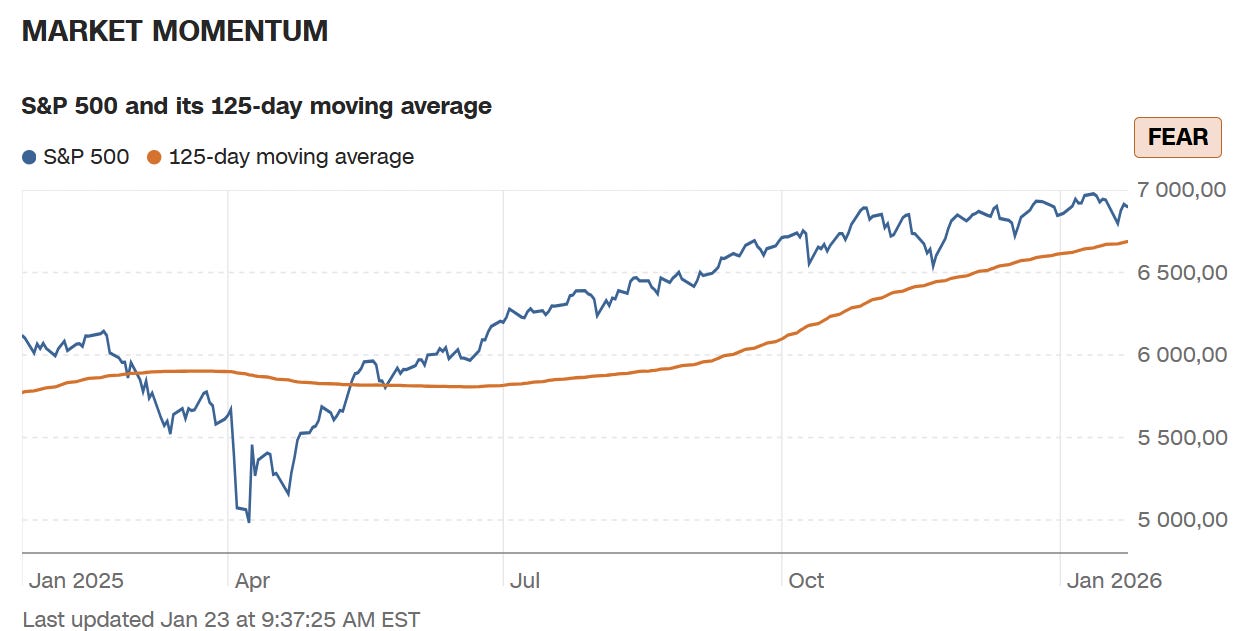
The S&P 500 is still well above its 125-day moving average. This indicates that the market is in an uptrend:
Predicting the future is impossible, but we can point to 5 quality growth businesses that continue to compound regardless of the market’s mood.
The businesses we look at continue to grow, have wide moats, great business models, and modest valuation levels.
Here are this month’s Top 5 Buys 👇
Disclaimer: This is not investment advice. Always conduct your due diligence and make your own investment decisions.
Top 5 Quality Buys January 2025 🚀
#1 Euronext ENX 0.00%↑
Euronext runs stock exchanges.
When people buy or sell shares, bonds, or derivatives in Europe, Euronext often earns a fee.
It operates major exchanges in countries like France, the Netherlands, Italy, Norway, Ireland, and Belgium.
This is not a bank or a broker. It’s the marketplace where trading happens.
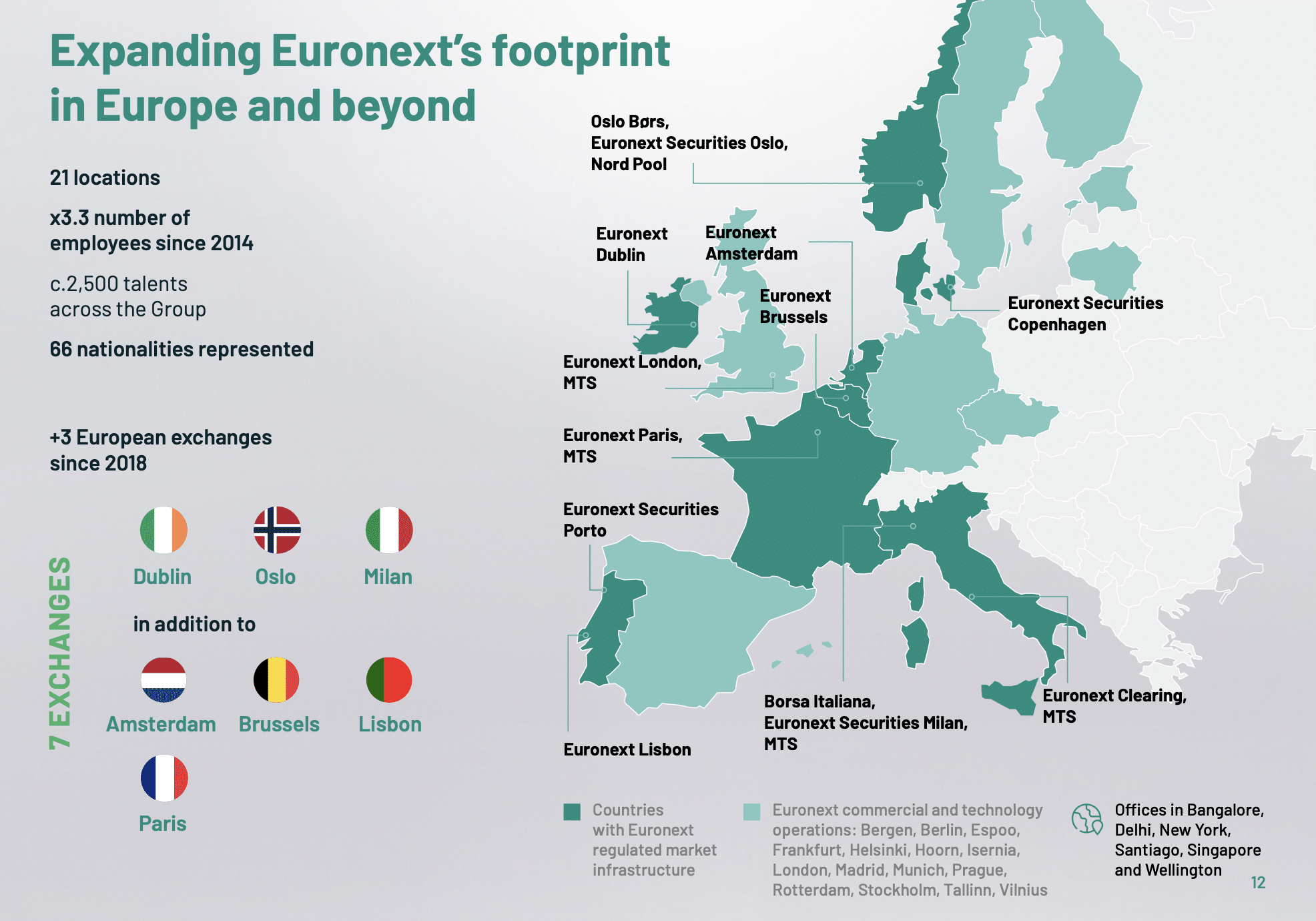
How Euronext Makes Money
Euronext earns money every time its markets are used.
Main revenue sources:
Trading fees when investors buy and sell securities
Listing fees from companies listed on its exchanges
Market data fees (prices, indexes, analytics)
Clearing and settlement services after trades
Many of these revenues are recurring.
More activity = more fees for Euronext.
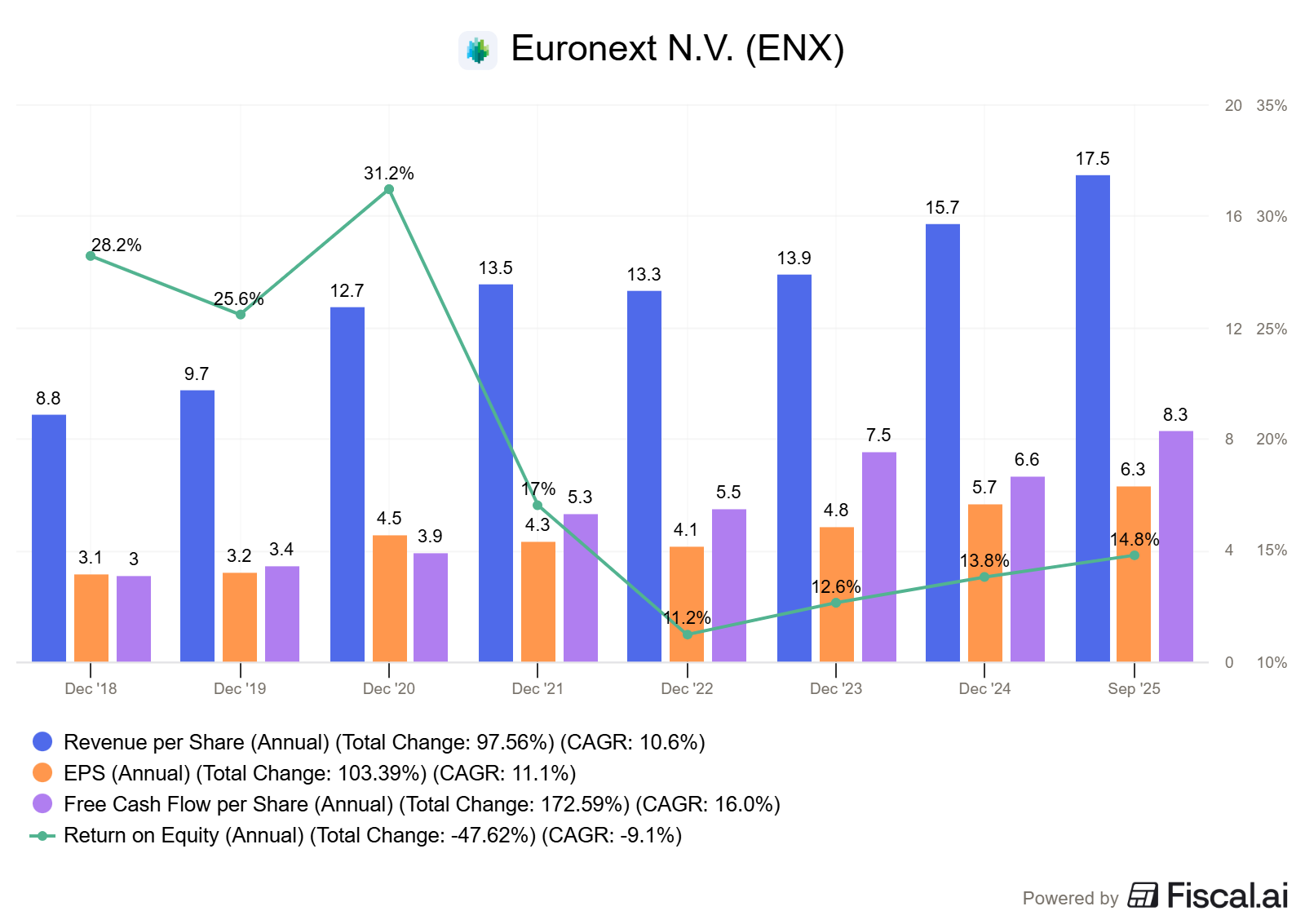
This provides a steady and predictable growth in revenues and cash flows:
Why Euronext Has a Strong Moat
Stock exchanges are natural monopolies.
Key advantages:
Barriers to entry: You can’t easily start a new exchange
Liquidity: Buyers go where sellers already are
Trust: Markets must be reliable and regulated
Scale: Large exchanges are cheaper and faster to run
Once a company is listed on Euronext, switching exchanges is costly and rare.
That makes the business very sticky.
Why the Business Can Grow 🚀
Euronext grows in durable ways:
More listed companies
Higher trading volumes over time
Growth in passive investing and ETFs
Selling more data and post-trade services
Even in bear markets, people still trade. That makes Euronext resilient across cycles. Monetizing activity in the stock market.
Financial Quality
Euronext is a high-quality cash generator.
Over time:
Strong operating margins of 53.4%
Low capital requirements (<30% of operating cash flows)
High free cash flow margins of 47.9%
Once the exchange is built, extra trades cost almost nothing.
That creates operating leverage.
Valuation
Euronext trades at a reasonable valuation:
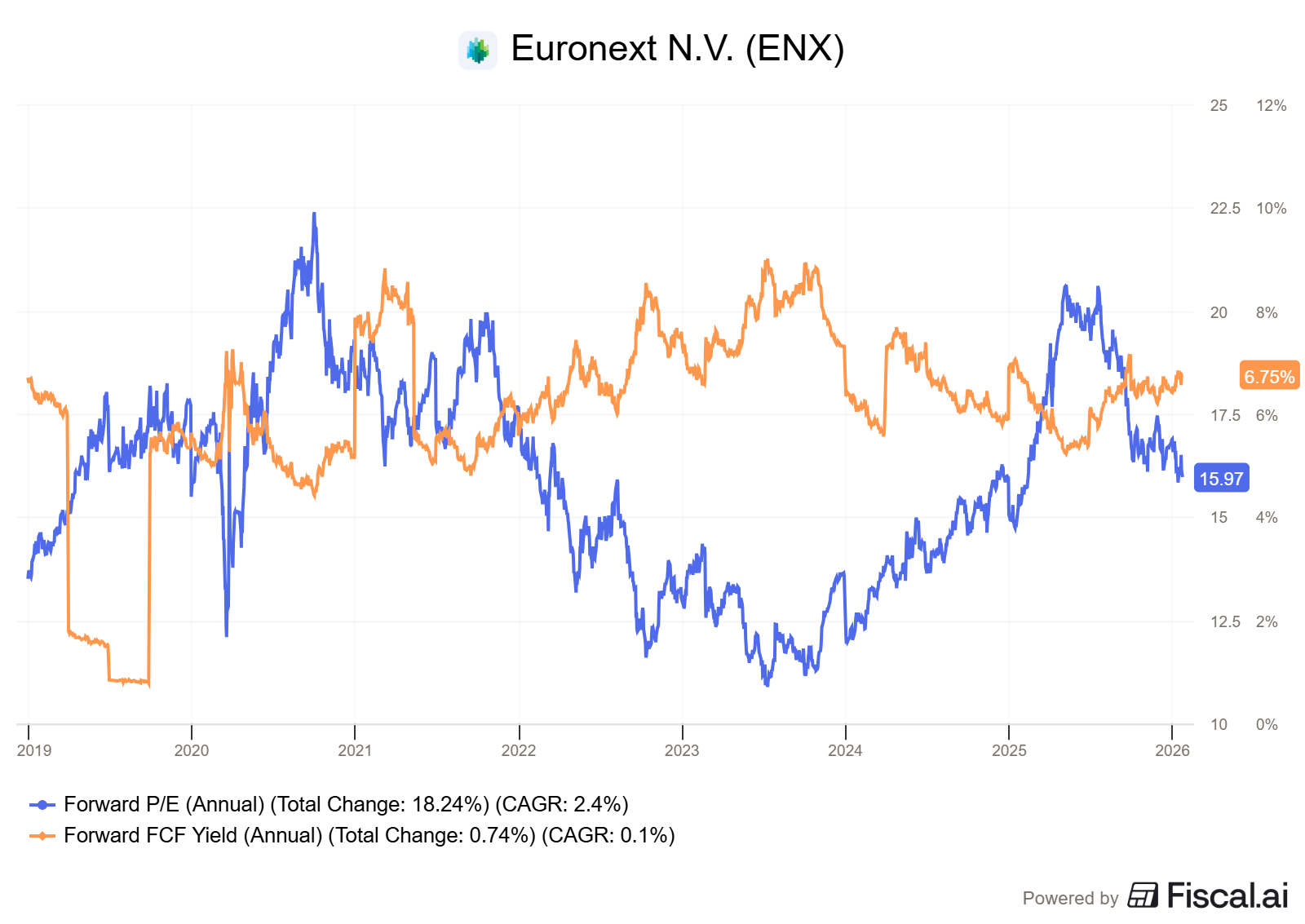
Forward P/E: 15.97x
FCF yield: 6.75%
While Euronext trades close to its historical PE/FCF yield, it is an undemanding valuation for a high-quality, cash-generating business:
Euronext is a toll booth on European capital markets.
It has:
High barriers to entry
Recurring revenue
Strong cash generation
Long-term relevance
Euronext is a great example of a boring but powerful compounder that benefits from markets simply existing and growing over time.
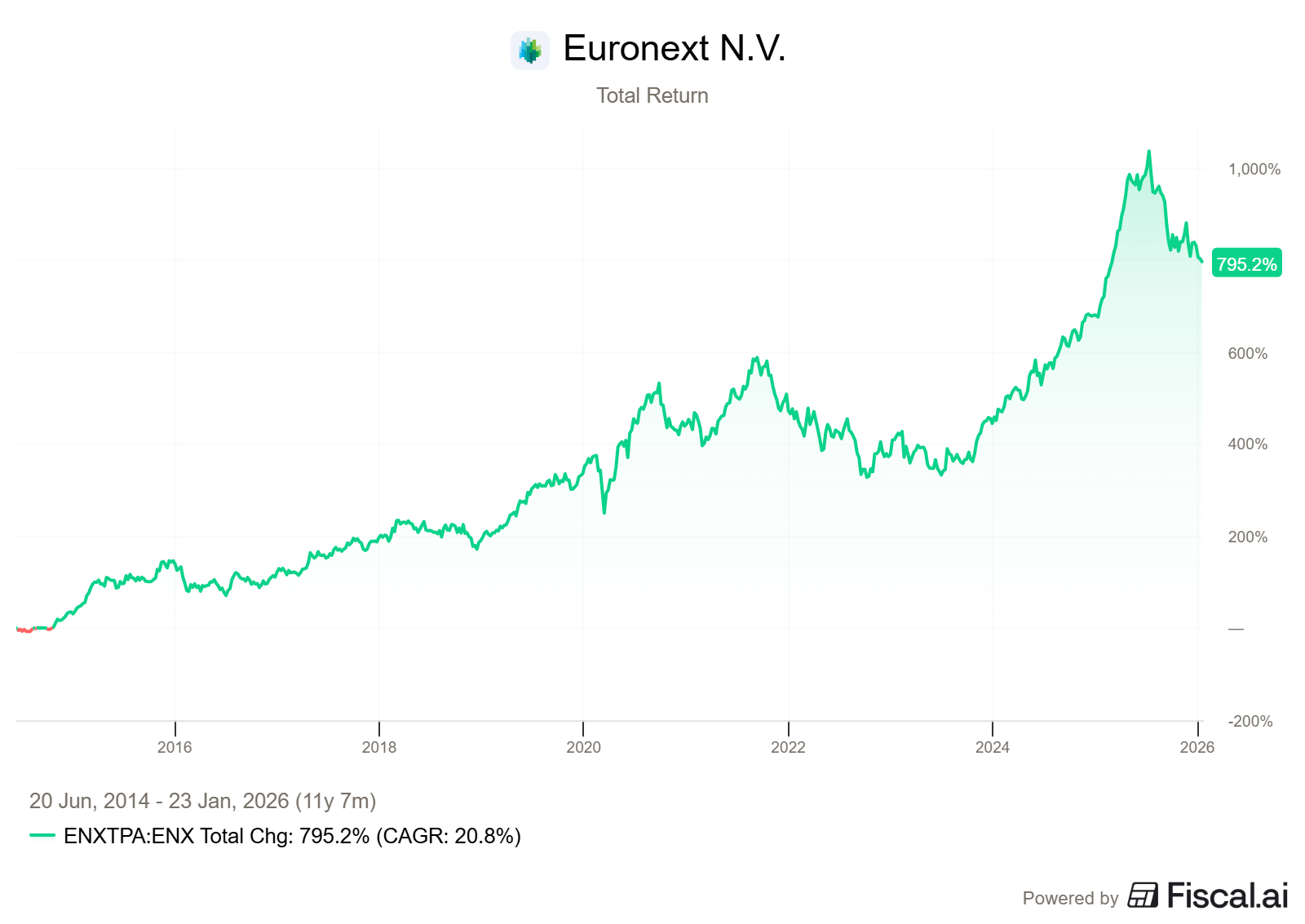
Since its inception, Euronext has a compounded annual growth rate of 20.8%:
#2 Gartner IT 0.00%↑
Gartner is a global research and advisory company focused on technology and business decisions.
Its customers are CIOs, CTOs, and senior executives at large companies.
They use Gartner to decide what technology to buy, when to buy it, and from whom.
Gartner serves thousands of enterprises worldwide and is deeply embedded in corporate decision-making.
This is not a flashy AI company. It’s a high-trust information business.
How Gartner Makes Money
Gartner makes its money from selling subscriptions.
Companies pay an annual fee to access:
Research reports
Benchmarks and frameworks
Analyst calls and advice
Once subscribed, customers tend to renew.
Why?
Decisions are high-stakes
Switching providers is risky
The cost is small relative to IT budgets
This creates recurring, predictable revenue.
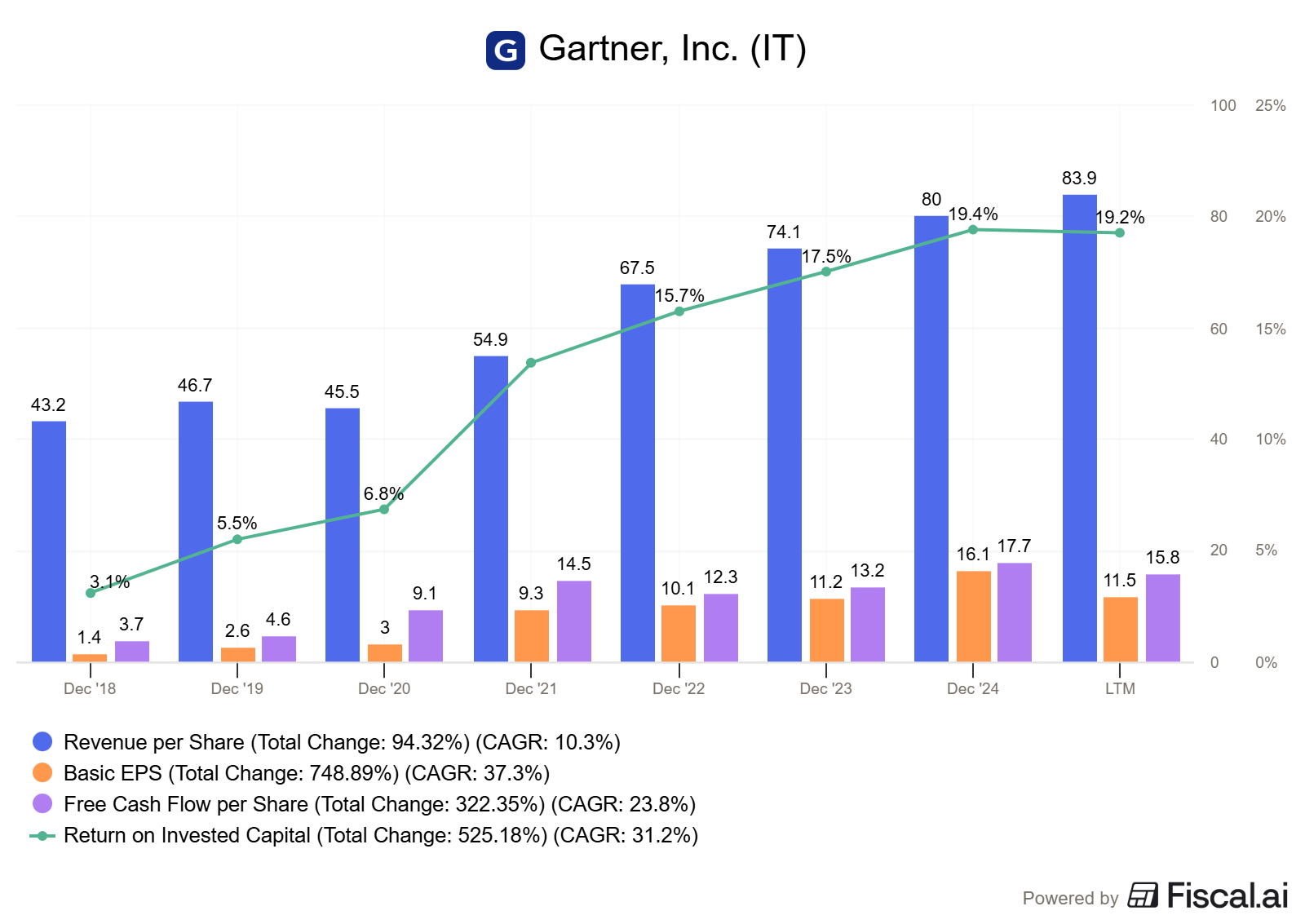
Gartner has compounded its EPS by 37.3% and FCF per share by 23.8% since 2018, while significantly expanding its ROIC:
Why Gartner Has a Strong Moat
Gartner’s moat is credibility, trust, and scale.
Decades of proprietary research
Thousands of analysts and data sources
Neutral, vendor-independent advice
A brand executives trust
Gartner’s insights often influence multi-million-dollar decisions.
Very few companies can match that level of trust.
Once a company relies on Gartner, it’s hard to stop.
This shows up in its retention rates of +95% for its business segment.
Why the Business Can Grow 🚀
Gartner benefits from long-term trends:
Rising IT complexity
More cloud, AI, and cybersecurity spending
Executives needing external guidance
Expansion within existing customers
Most growth comes from:
Price increases
Selling more seats and services
High renewal rates
This leads to steady per-share compounding.
Financial Quality
Gartner is a capital-light cash generator.
Over time, it has shown:
High operating margins of +18.1%
Strong free cash flow growth (10-year CAGR: +16.6%)
Capital light business model with Capital Expenditure representing less than 10% of operating cash flows
That makes Gartner a capital-light compounder.
Valuation
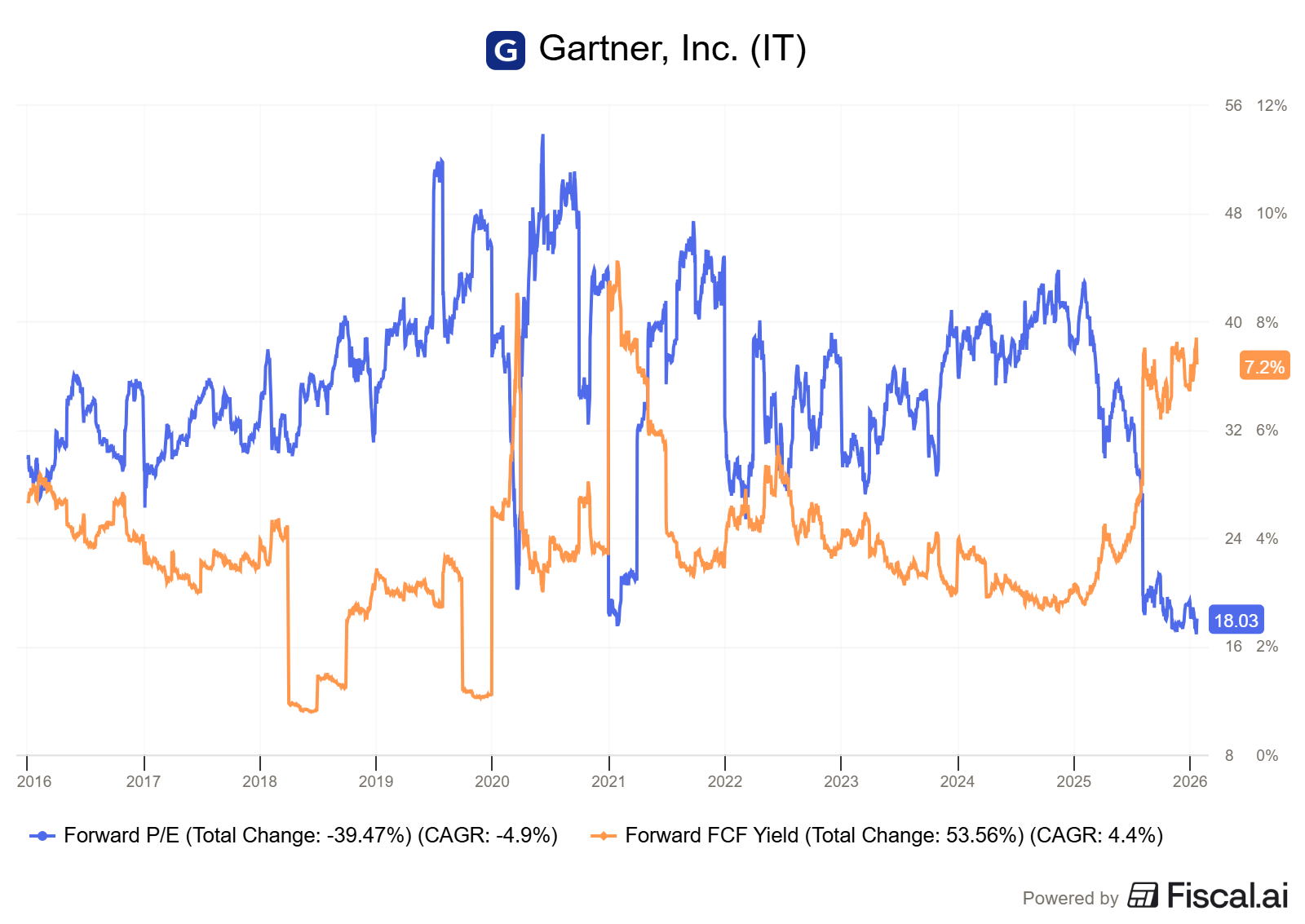
Gartner usually trades at a premium valuation, but has recently fallen to a multi-year low:
Forward P/E: 18x
Forward FCF yield: 7.2%
Investors pay up because:
Revenue is recurring
Churn is low
Cash flows are predictable
Forward PE and FCF yield are currently at historical low levels for Gartner:
Gartner sells trusted advice, not software.
It has:
Sticky subscriptions
Strong pricing power
Minimal capital requirements
Long-term growth tailwinds
Gartner is a great example of a quiet, high-quality business that compounds steadily over time.
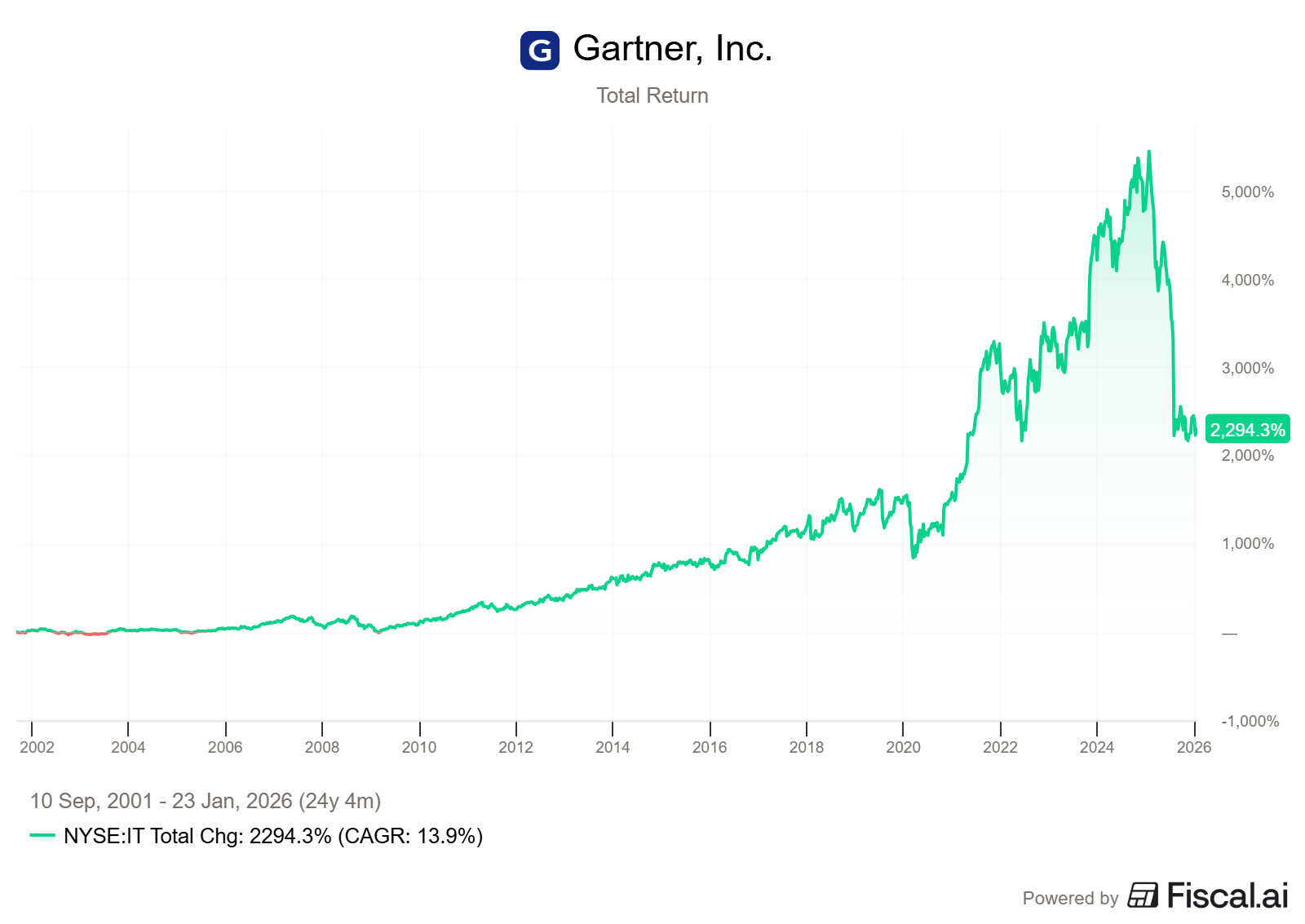
Despite the recent sharp fall in share price, Gartner has compounded by 13.9% CAGR since inception:
Now, let’s get into the top 3 👇
